Why did my health app start asking for camera access recently?
An increasing number of health and wellness apps are requesting camera access to provide contactless vital signs monitoring. This shift is driven by a technology called remote photoplethysmography (rPPG).
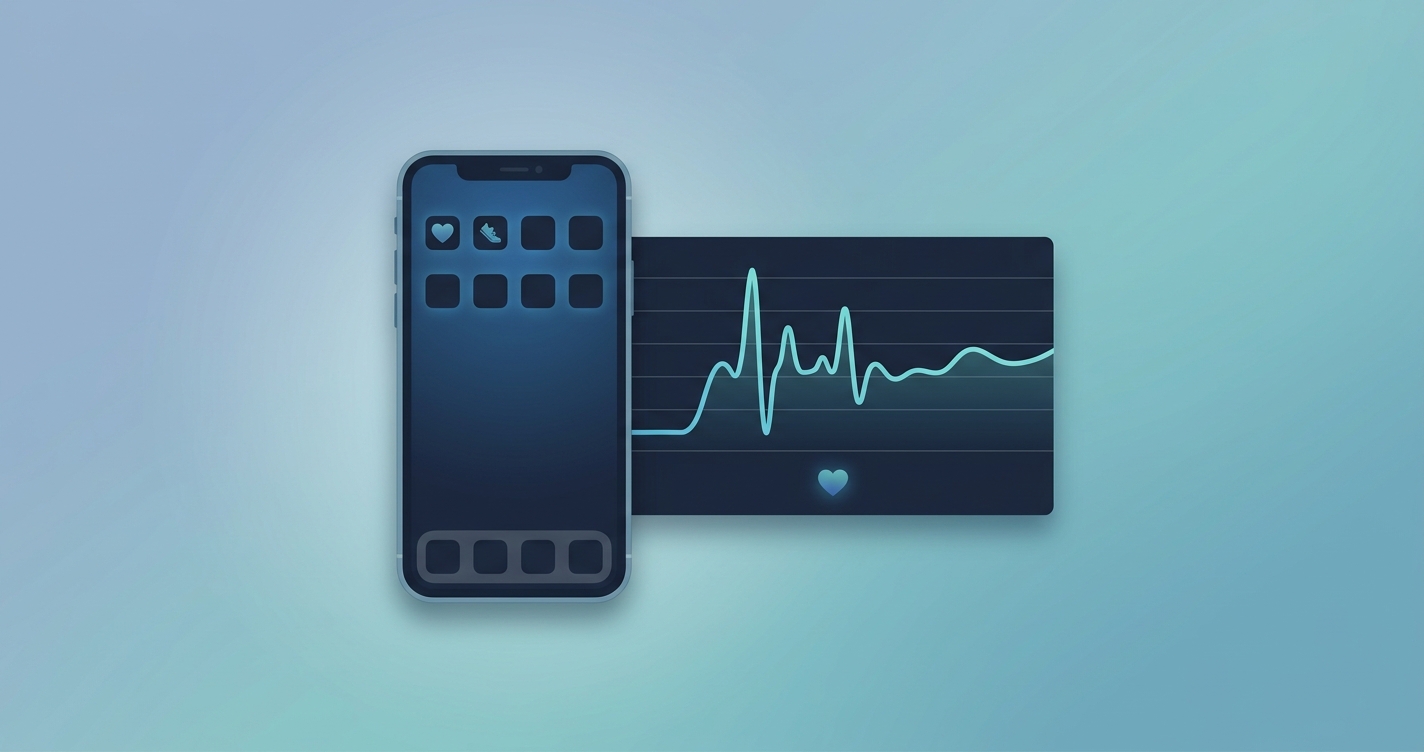
If your health or wellness app recently prompted you for camera access, you're not alone. This trend isn't about snapping post-workout selfies; it's a significant technological shift in how we measure health. The underlying technology, remote photoplethysmography (rPPG), uses the phone's camera to detect subtle, imperceptible changes in the color of your skin to calculate vital signs like heart rate and respiratory rate. This move from hardware-dependent monitoring (like smartwatches or fitness bands) to software-based, contactless measurement marks a new chapter in personal health tracking, driven by advancements in AI and computer vision.
"The global AI-powered remote vital sign camera market reached an estimated value of USD 1.48 billion in 2024 and is projected to expand at a Compound Annual Growth Rate (CAGR) of 18.2% from 2025 to 2033." - Vertex AI Search, 2024
The Rise of the Camera as a Health Sensor
The primary reason a health app would request health app camera access permission is to implement rPPG. This technology analyzes video frames of a user's face to measure the volumetric changes in blood flow. As the heart pumps, the capillaries in your skin expand and contract, causing minute changes in light reflection. While invisible to the naked eye, a standard smartphone camera can capture these changes. Sophisticated algorithms then process this video signal to extract physiological data.
This capability transforms a device already in everyone's pocket into a powerful health assessment tool. For app developers, it opens a new frontier for user engagement and value, allowing them to offer health insights without requiring users to purchase or wear a separate device. The technology has been the subject of extensive academic research, with pioneers like Daniel McDuff and Giuseppe Boccignone developing foundational techniques and frameworks. Research from institutions like Bielefeld University continues to push the boundaries of accuracy and real-world applicability.
The appeal is clear: lower friction for the user and lower barriers to entry for developers wanting to build health-aware features. Instead of relying on hardware integrations with a fragmented wearable market, developers can use a software development kit (SDK) to add camera-based scanning directly into their existing applications.
On-device vs. cloud processing: a key architectural decision
When a health app uses the camera to measure vitals, it must process the video data. This presents a fundamental choice: process the data on the user's device or send it to the cloud for analysis. This decision has major implications for privacy, latency, and accuracy.
| Feature | On-Device Processing | Cloud-Based Processing |
|---|---|---|
| Privacy | High. Raw video data never leaves the device. | Lower. Data is sent over the internet, creating a potential point of failure. |
| Latency | Low. Results are nearly instantaneous. | High. Dependent on network speed and server load. |
| Scalability | Limited by the device's processing power. | High. Cloud servers can handle complex, large-scale analysis. |
| Cost | Higher upfront SDK licensing cost, but no ongoing server costs. | Lower upfront cost, but ongoing costs for data transfer and processing. |
| Offline Access | Yes. Measurements can be taken without an internet connection. | No. Requires a persistent internet connection. |
| Algorithm Updates | Requires an app update to be pushed to the user. | Can be updated and deployed instantly on the server. |
For most consumer applications, on-device processing is the preferred method due to its significant privacy advantages. Users are understandably wary of sending video of their face to a remote server. By keeping all analysis on the phone, developers can build trust and reduce their data liability.
Industry Applications
The use of camera-based vitals is expanding rapidly across several industries.
Telehealth and virtual care
Providers are integrating rPPG to gather baseline vitals during virtual consultations. This allows clinicians to triage patients more effectively and collect objective data before an appointment, improving the quality of remote care.
Wellness and fitness
Apps for fitness, mindfulness, and general well-being are using camera scans to help users track their resting heart rate, stress levels (via heart rate variability), and recovery after exercise. This adds a quantitative layer to wellness journeys.
Insurtech and underwriting
Some life and health insurance companies are exploring rPPG as a way to streamline the underwriting process. By allowing applicants to complete a quick, contactless health screening, they can reduce the need for in-person medical exams, making the process faster and more convenient.
Current research and evidence
The field of rPPG is built on a foundation of rigorous scientific research. A 2021 current review by Pireh Pirzada, Adriana Wilde, and David Harris-Birtill summarized the evolution from conventional computer vision methods to the more robust deep learning models used today. These models are better at handling common challenges like motion artifacts (the user moving during a scan) and variable lighting conditions, which is critical for real-world accuracy.
However, challenges remain. A study from researchers at Bielefeld University (2023) noted that the accuracy of some rPPG techniques can decrease at elevated heart rates, an area of active research and development. The core trade-off is between the convenience of a contactless measurement and the medical-grade precision of a dedicated contact device. For non-clinical wellness applications, the accuracy of modern rPPG SDKs is widely considered sufficient and highly valuable.
The future of camera-based health monitoring
As smartphone cameras and processors become more powerful, the potential applications for rPPG will only grow. We can expect to see the technology expand beyond heart and respiratory rate to include measurements like blood pressure, oxygen saturation, and even blood glucose in the future. The integration of multi-modal AI, combining camera data with other inputs like voice and gyroscope data, could provide an even more holistic view of a user's health.
The key to this future is ensuring user privacy and trust. Developers and organizations entering this space must prioritize privacy-by-design principles, clearly communicate how data is used, and give users full control over their information. Regulations like GDPR and HIPAA will continue to shape how these services are delivered.
Frequently asked questions
Q: Is it safe to give a health app camera access? A: It depends on the app and its privacy policy. Apps that use on-device processing are generally safer from a privacy perspective, as your video data is not sent to a server. Always review the privacy policy to understand how your data is handled before granting permissions.
Q: How accurate is measuring heart rate with a camera? A: The accuracy of camera-based heart rate monitoring has improved significantly. For modern, well-implemented rPPG SDKs, accuracy is often comparable to consumer-grade wearables, especially for resting heart rate. However, it is not a medical device and should not be used for diagnosis.
Q: Can the app see or store my video? A: Legitimate health apps using rPPG do not need to store your video. The algorithms analyze the video stream in real-time and discard it. Reputable developers will make this clear in their privacy policies. On-device processing architectures make this technically enforceable.
Q: Why does the app need this now? It didn't before. A: The technology for camera-based vitals has only recently become mature and accessible enough for widespread deployment in mobile apps. The combination of powerful smartphone processors and advanced AI algorithms developed over the last few years has made this feature possible at scale.
This industry-wide shift towards software-defined health sensing is just beginning. As developers and health platforms look to build the next generation of engaging and impactful digital health experiences, the camera is becoming a central tool. Circadify is at the forefront of this movement, providing developer tools to address this space. To learn more about integrating these capabilities into your own platform, explore our developer documentation at circadify.com/custom-builds.