How Long Does It Take to Integrate a Vitals SDK?
Realistic vital signs SDK integration time estimates by platform and team size, from first prototype to production-ready contactless vitals.
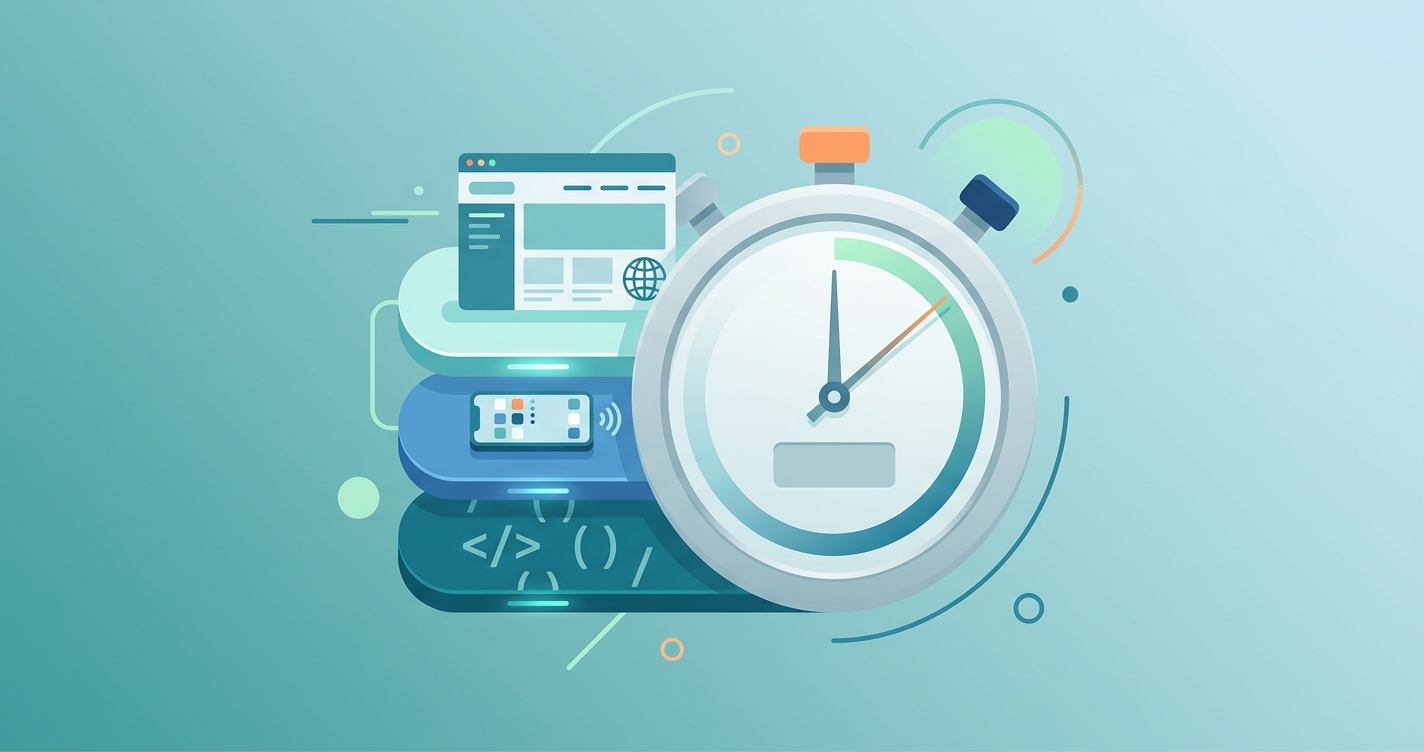
Engineering managers scoping a sprint to add contactless vitals almost always ask the same question first, and it is rarely the one about accuracy. It is about time. The honest answer to vital signs SDK integration time depends on three variables most planning documents ignore: the target platform, the size and prior health-tech experience of the team, and how far past a working demo the definition of "done" actually sits. A camera-based heart rate prototype can run in an afternoon. A production deployment that survives App Store review, handles edge-case lighting, and pipes results into an existing record system is a different unit of work entirely. Treating those two milestones as the same number is the most common reason integration estimates slip.
A 2025 review of remote photoplethysmography research reported camera-based heart rate accuracy reaching 99.1 percent and SpO2 accuracy around 93.4 percent, which means the hard signal-processing problem is largely solved at the SDK layer. The remaining work for integrating teams is plumbing, not science.
What actually drives vital signs SDK integration time
The phrase "drop-in SDK" sets an expectation that integration is a single import statement. In practice, a vital signs SDK integration timeline breaks into four distinct phases, and the proportions shift dramatically by platform. Phase one is the prototype: get a camera frame, run a scan, print a number. Phase two is the user-facing flow: camera permissions, framing guidance, progress feedback, and graceful failure when a face leaves the frame. Phase three is data handling: where results go, how they are stored, and what consent the user gave. Phase four is hardening: testing across devices, lighting conditions, and skin tones, plus the platform review process for camera-based health features.
Most teams underestimate phases two and four because the demo, which only exercises phase one, makes the whole job look finished. The time to add contactless vitals is dominated by the work that happens after the first successful reading, not before it.
Three factors move the estimate more than anything else:
- Platform. Web integrations skip native build tooling and store review but inherit browser camera quirks. iOS adds App Store review for health-adjacent camera use. Android adds device fragmentation across camera hardware.
- Team experience. A team that has shipped a camera feature before moves roughly twice as fast through the permissions and lifecycle work as a team meeting it for the first time.
- Definition of done. A clickable demo, an internal beta, and a public production release are three separate finish lines, often weeks apart.
Integration timeline by platform and team size
The table below sets realistic ranges for an rPPG SDK quick start through to production. Estimates assume a standard SDK with documented APIs, not a custom build, and count working days of focused effort rather than calendar time.
| Platform | Prototype (working scan) | Production-ready (solo dev) | Production-ready (2-3 dev team) | Primary time sink |
|---|---|---|---|---|
| Web (JS/WASM) | 0.5 to 1 day | 6 to 10 days | 4 to 7 days | Browser camera permissions, cross-browser testing |
| iOS (Swift) | 1 to 2 days | 8 to 14 days | 5 to 9 days | App Store review for health camera use |
| Android (Kotlin) | 1 to 2 days | 10 to 16 days | 6 to 11 days | Device and camera hardware fragmentation |
| Cross-platform (React Native / Flutter) | 1 to 3 days | 12 to 18 days | 7 to 12 days | Native bridge plus dual-store review |
A few patterns hold across every row. The prototype phase is short and roughly platform-independent because the SDK does the signal processing. The gap between prototype and production is where the real vital signs API integration timeline lives, and it widens on platforms with store review and hardware variability. A small team does not finish in a third of the time a solo developer needs, because review queues, QA cycles, and consent design have fixed costs that do not parallelize cleanly.
Industry applications and how scope changes the estimate
The same SDK lands on very different timelines depending on what the product around it has to do. Scope, not the SDK itself, is usually the deciding variable.
Wellness and fitness apps
These have the shortest path. A spot heart rate or stress reading before a workout needs the scan, a result screen, and basic consent. There is rarely an existing clinical data pipeline to integrate with, so phase three is light. Most fitness teams reach a public release inside two to three weeks on a single platform.
Telehealth and clinical platforms
Here the SDK is the easy part. Results have to flow into a patient record, attach to a visit, and respect existing audit and consent frameworks. The health monitoring SDK setup might take a week, but wiring it into a regulated data path and validating that integration can take a month or more. Teams should budget for the surrounding systems, not the camera.
Insurance and enterprise onboarding
Identity binding, fraud checks, and high-volume reliability dominate. The scan flow is straightforward, but enterprise QA, security review, and load expectations stretch the hardening phase well beyond what a consumer app requires.
Current research and evidence
The reason the prototype phase is so short is that the underlying measurement problem has matured. A 2025 review published through OAE Publishing on camera-based photoplethysmography for blood pressure documented steady gains in contactless measurement, while clinical validation work on non-contact mobile applications, indexed in PubMed Central, reported heart rate accuracy up to 99.1 percent and SpO2 near 93.4 percent under controlled conditions. The WellFie smartphone validation study published on medRxiv (2024) similarly found respiratory rate accuracy around 84 percent, with blood pressure remaining the most variable metric. The practical takeaway for integrating teams is consistent: heart rate, respiration, and SpO2 are dependable at the SDK boundary, so engineering time should go toward capture conditions, not toward second-guessing the algorithm.
That evidence also explains why testing across lighting and skin tone is non-negotiable in the hardening phase. Researchers repeatedly identify subject movement, ambient light, and skin tone as the dominant sources of error. An SDK can correct for a lot, but a capture flow that guides users into good conditions does more for real-world reliability than any post-processing. Teams that skip this step ship a demo that works for the developer and fails for a fifth of their users.
The future of vitals SDK integration
Integration time is trending down, and the direction is clear. Three shifts are compressing the vital signs SDK integration time that teams should plan around over the next two years:
- Standardized capture components. Prebuilt, themeable scan UIs are moving the phase-two work from custom code to configuration, removing days of permissions and framing logic.
- Edge processing by default. On-device inference reduces the data-handling burden in phase three because raw video never leaves the device, simplifying consent and compliance scoping.
- Review-ready templates. Documentation and privacy-manifest examples tuned for health camera features are shortening the store review phase that historically caused the most calendar slip.
The net effect is that the realistic floor for a production single-platform integration is compressing from months toward a small number of weeks, while the prototype remains a one-day exercise. The teams that hit the low end of the ranges above are not faster coders. They scope the post-demo work upfront and treat consent, testing, and review as planned line items rather than surprises.
Frequently asked questions
How long does it take to integrate a vitals SDK for a basic prototype?
A working scan that returns a heart rate typically takes half a day to two days regardless of platform, because the SDK handles the signal processing. The longer timeline begins after the prototype, in user-flow design, data handling, and testing.
Why does Android usually take longer than iOS?
Android camera and sensor hardware varies widely across manufacturers and price tiers, so the testing matrix is larger. iOS has fewer device variations but adds App Store review scrutiny for health-related camera features. Both add roughly a week over the bare prototype.
Does a larger team finish proportionally faster?
No. A two-to-three person team is faster than a solo developer but not by the full headcount ratio, because store review queues, QA cycles, and consent design have fixed durations that do not parallelize. Expect roughly a 30 to 45 percent reduction, not a 3x speedup.
What is the single biggest cause of timeline slip?
Treating the working demo as near-complete. The demo only exercises the easiest phase. Underbudgeting the capture flow, cross-condition testing, and platform review is the most common reason a "one week" estimate becomes a one-month delivery.
Circadify is building developer tooling aimed squarely at the post-demo bottleneck, with prebuilt capture components, edge processing, and review-ready documentation designed to keep the production path measured in days rather than months. Engineering managers scoping a sprint can pull developer docs and request API keys to benchmark the real timeline against their own stack at circadify.com/custom-builds.