Why is that new wellness app asking me to scan my face every morning before I wake up?
A look at the morning face scan wellness trend, the rPPG tech behind it, and what developer teams need to build daily vitals into engagement loops.
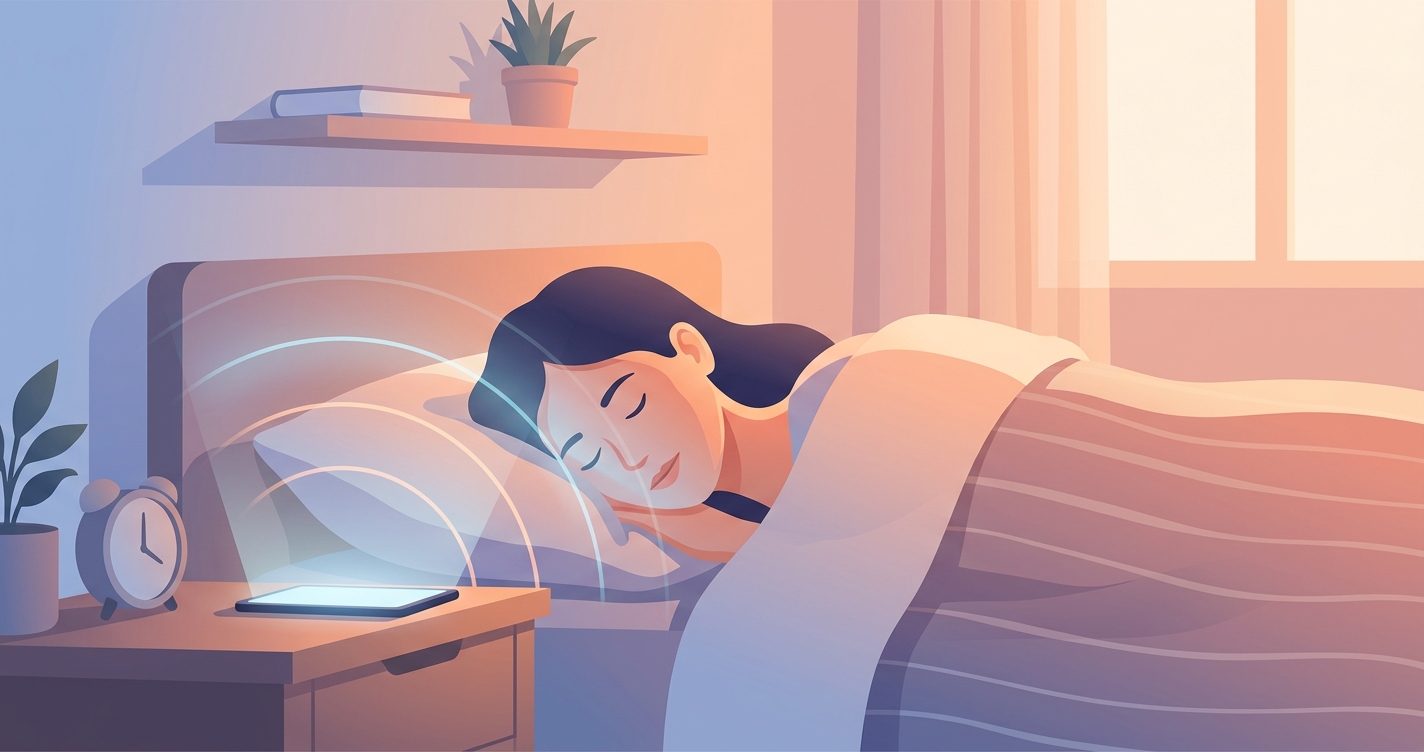
A growing number of consumer health products now open with the same request: point the front camera at your face for thirty seconds before you do anything else. The prompt feels invasive at first glance, but it reflects a deliberate product strategy. The morning face scan wellness pattern is emerging because the minutes right after waking produce the cleanest physiological signal a person generates all day, and because a daily ritual anchored to that window is one of the most reliable retention mechanics a wellness platform can build. For developer teams evaluating whether to add camera-based vitals to an existing app, understanding why this pattern works is the first step toward deciding how to implement it.
The technology underneath is remote photoplethysmography, or rPPG. A standard RGB camera detects the tiny color shifts in facial skin caused by blood pulsing through capillaries. From that signal, software can estimate heart rate, heart rate variability (HRV), respiratory rate, and related metrics without any contact. No wristband, no finger clip, no extra hardware purchase. That last point is what makes the morning scan commercially interesting: it works on devices users already own.
A 14-day observational study of healthy adults by researchers publishing in MDPI's journal Sensors (2024) found that higher morning RMSSD was associated with better self-reported sleep, lower fatigue, and reduced stress, supporting the use of a single daily resting measurement as a wellness signal.
What the morning face scan wellness trend actually measures
The reason apps push the scan to the moment before you get out of bed is physiological, not arbitrary. Resting HRV measured at a consistent time upon waking, in a consistent position, is the field standard for tracking autonomic recovery. The autonomic nervous system has not yet been perturbed by caffeine, movement, stress, or food. That makes the morning reading the most comparable day-over-day data point available, which is exactly what a personalization engine needs.
The metric most products surface is a readiness or recovery score. Under the hood it is usually built on RMSSD, the root mean square of successive differences between heartbeats, which primarily reflects parasympathetic (vagal) activity. As HRV researcher Marco Altini has written, a readiness signal is meaningful only when current resting HRV is compared against an individual's own rolling baseline, typically the prior 60 to 90 days, rather than against population norms. A score that drops below an individual's baseline can flag poor sleep, incomplete recovery from exercise, psychosocial stress, or early illness.
For a product team, the takeaway is that the morning face scan wellness loop is less about a single number and more about building a longitudinal baseline. The first scan is nearly useless. The thirtieth scan is where the product gets sticky, because the app can finally say something specific about today relative to this user's normal.
How camera-based morning scans compare to alternatives
Teams adding a daily vitals ritual generally weigh four input methods. Each carries different friction, cost, and data-quality tradeoffs.
| Method | Extra hardware | Setup friction | Morning data quality | Best fit |
|---|---|---|---|---|
| Camera face scan (rPPG) | None | Low, opens to a prompt | Good if guided and well-lit | Broad consumer wellness apps |
| Finger-on-camera PPG | None | Medium, requires contact | Good but easy to do wrong | Apps wanting a tactile ritual |
| Wearable ring or band | Yes, separate purchase | High, must buy and charge | Excellent, passive overnight | Premium or hardware-bundled products |
| Manual self-report | None | Low | Subjective, not physiological | Mood and habit journaling apps |
The pattern most platforms converge on is camera-based scanning, because it removes the single largest drop-off point in any health feature: asking the user to buy and maintain a separate device. The cost is that camera capture demands more guidance. Lighting, head stability, and capture duration all affect signal quality, which means the SDK and the UX around it carry real weight.
Practical considerations developer teams raise when scoping a morning scan feature:
- Capture guidance matters more than the model. A clear face-positioning overlay and lighting check prevents most bad readings before they happen.
- The baseline period is a product decision, not just an algorithm one. Communicate to users that early scores are provisional.
- Consistency beats frequency. One reliable morning reading outperforms several scattered daytime scans for trend analysis.
- On-device processing reduces both latency and privacy exposure, which simplifies app store review and user trust messaging.
- Wellness framing is a regulatory boundary. Insights, not diagnoses, keep the feature in the consumer wellness category.
Industry applications for daily camera-based vitals
Wellness and habit platforms
The clearest fit is the daily-engagement product. A morning scan creates a natural open-the-app trigger, generates a personalized data point, and gives the rest of the session something to react to. Recommendations for breathwork, training intensity, hydration, or sleep timing all become more credible when anchored to a physiological reading instead of a generic schedule. For these teams, a white-label health scanning SDK is attractive because it converts a months-long signal-processing research project into an integration task.
Fitness and recovery apps
Training products use morning HRV to modulate workout recommendations, suppressing high-intensity sessions on low-readiness days. A narrative review in PMC on monitoring training adaptation via mobile HRV described RMSSD captured through phone-based methods as a practical field tool for athletes, which validates the approach for consumer fitness software that cannot assume a chest strap.
Telehealth and chronic care adjuncts
Clinical-adjacent platforms increasingly want a passive way to collect trend data between visits. A morning scan that logs resting heart rate and HRV over time gives clinicians context without requiring patients to operate medical hardware. Here the contactless vitals API has to be paired with careful scoping so the feature supports care rather than claiming to diagnose.
Current research and evidence
The evidence base for both the signal and the delivery method has matured. On the delivery side, a 2024 medRxiv study evaluating a smartphone rPPG application reported agreement between camera-derived vitals and reference devices, part of a broader body of work showing that consumer cameras can recover usable cardiovascular signals. The arXiv ReViSe framework (Khanam et al., 2022) demonstrated multi-vital extraction from face video captured in everyday living conditions rather than controlled labs, which is the relevant test for a real morning-scan deployment.
On the signal side, the case for resting HRV as a wellness indicator is well established. The 2024 Sensors observational study linking morning RMSSD to sleep, fatigue, and stress, combined with a systematic review and meta-analysis in JMIR connecting depressed HRV to the onset and progression of COVID-19, shows that a daily resting reading carries genuine information about recovery and emerging illness. Researchers across these studies share one caution worth building into any product: proprietary composite scores often lack transparency, so exposing or at least grounding insights in validated metrics like RMSSD builds more durable user trust than an opaque number.
The future of the morning face scan wellness ritual
Three shifts are likely over the next few product cycles. First, capture will get more forgiving as models improve at handling motion and variable lighting, lowering the friction that currently makes guided capture necessary. Second, the morning scan will become multi-metric by default, with respiratory rate and other estimates joining heart rate and HRV in a single reading, raising the information value of each session without adding user effort. Third, the differentiator will move from raw measurement to interpretation. Once contactless capture is commodity, the products that win will be the ones that turn a daily reading into a specific, personalized action.
For engineering leaders, the strategic implication is that the measurement layer is not where you want to spend eighteen months. Building rPPG in-house means assembling signal processing, model training, validation datasets, and device-variability handling before you ship a single user-facing feature. Licensing a drop-in SDK collapses that into days, letting the team concentrate on the baseline logic, the recommendation engine, and the ritual design that actually differentiate the product.
Frequently asked questions
Why does the app want the scan before I get out of bed?
Resting HRV measured at a consistent time right after waking, before caffeine, movement, or stress, is the most comparable data point a person produces each day. That consistency is what lets the app build a reliable personal baseline and detect meaningful day-to-day changes.
Is a camera face scan as good as a wearable for this?
For a single guided morning reading, camera-based rPPG can produce good-quality resting heart rate and HRV data without any extra hardware. Wearables capture richer passive overnight data, but they require purchase, charging, and consistent wear, which is the friction camera scanning removes.
What does the readiness score actually represent?
Most readiness scores are built on RMSSD, a measure of parasympathetic activity, compared against the user's own rolling baseline rather than population averages. A reading below baseline can reflect poor sleep, training fatigue, stress, or early illness.
As a developer, do I need to build the rPPG pipeline myself?
No. The signal processing, model training, and device-variability handling are the slowest parts to build and validate in-house. A white-label scanning SDK provides the measurement layer so your team can focus on baseline logic, recommendations, and the engagement ritual.
Circadify is building developer tooling for exactly this space: a drop-in rPPG SDK that adds contactless vitals to an existing app in days rather than months, so teams can ship a morning scan ritual without standing up a signal-processing team first. Explore the developer docs and request API keys at circadify.com/custom-builds.