How to Add Heart Rhythm (AFib) Screening to a Health App
Explains how camera-based pulse signals can flag irregular rhythms, plus the validation and compliance caveats developers must plan for when building health apps.
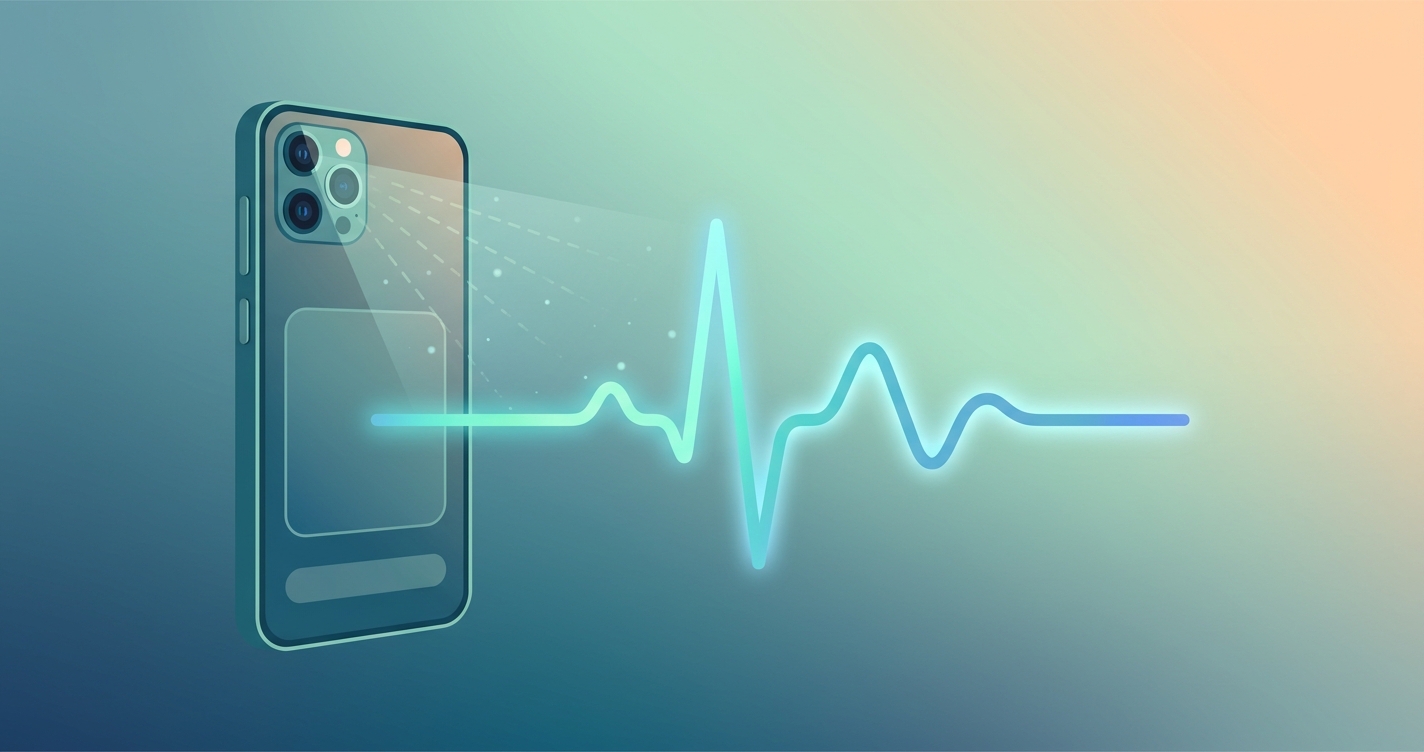
The demand for cardiovascular monitoring in consumer and clinical applications is forcing engineering teams to rethink how they capture biometric data. Historically, tracking heart rhythms required specialized hardware like chest straps or clinical electrocardiogram monitors. Today, advancements in remote photoplethysmography allow standard smartphone cameras to detect micro-vascular changes in the skin, translating video feeds into high-fidelity pulse signals. For development teams tasked with integrating this capability, choosing the right atrial fibrillation screening SDK determines whether a project ships in weeks or stalls in regulatory and technical purgatory.
Capturing a pulse optically is a solved problem. The complex engineering begins when you attempt to classify the rhythm of that pulse in real-world environments. Detecting irregular rhythms requires absolute precision in measuring the time between consecutive heartbeats. A missed peak in the pulse wave, caused by a shadow or a sudden head movement, can easily mimic an irregular beat. Building an architecture that can confidently flag irregularities without overwhelming users with false positives is the primary challenge for any modern health platform.
"The remote atrial fibrillation detection market is forecasted to climb to $2.6 billion by 2035, driven by the shift toward software as a medical device and developer APIs that integrate directly into existing patient platforms." (Statsnex Market Insights, Remote Cardiac Monitoring Market Report, 2024)
Evaluating an atrial fibrillation screening SDK
Integrating an irregular heartbeat detection API requires evaluating signal extraction reliability, latency, and compliance. The core technical hurdle is not merely detecting a pulse, but capturing a signal clean enough to analyze beat-to-beat variability, commonly referred to as RR intervals. When a user presents with an irregular rhythm, the algorithm must differentiate between a true ectopic beat, motion artifact, or poor lighting.
Building this capability from scratch involves developing proprietary computer vision models, collecting massive training datasets of diverse skin tones under varying lighting conditions, and navigating a labyrinth of regulatory requirements. For most software teams, this is a distraction from their core product roadmap.
Below is a comparison of common architectural approaches when adding heart rhythm analysis to a product platform.
| Implementation Strategy | Signal Processing Responsibility | Development Timeline | Hardware Dependency | Capital Expenditure |
|---|---|---|---|---|
| Proprietary In-House Algorithm | Internal computer vision team | 12 to 24 months | Requires custom calibration | Extremely High |
| Dedicated Clinical Hardware | Third-party device manufacturer | 3 to 6 months | High (wearables, physical attachments) | High (per-user hardware cost) |
| Health Monitoring SDK | External SDK vendor | 2 to 4 weeks | None (standard smartphone cameras) | Low (software licensing) |
When evaluating a vendor for a health monitoring SDK, engineering leaders must prioritize tools that handle the heavy lifting of signal processing locally. A robust integration should provide:
- Signal-to-noise ratio optimization that automatically adjusts to variable environmental lighting conditions.
- Edge-based processing architectures to maintain user privacy and reduce reliance on constant network connectivity.
- Robust artifact rejection algorithms that discard video frames where user motion corrupts the optical pulse wave.
- Secure data handling that isolates raw biometric video from backend servers, processing only the encrypted biometric outputs.
Architectural challenges in irregular heartbeat detection
The physics of remote photoplethysmography rely on the absorption of ambient light by hemoglobin in the blood. As the heart beats, the volume of blood in the facial microvasculature changes, causing microscopic shifts in the color of the skin. A camera captures these shifts, and an algorithm filters the red, green, and blue channels to isolate the pulse signal.
Managing motion and environmental noise
In a controlled laboratory setting, extracting this signal is straightforward. In a consumer application, the user might be walking, sitting in a dimly lit room, or facing a window with harsh backlighting. An atrial fibrillation screening SDK must include logic that guides the user into the correct posture and lighting conditions before recording begins. If the API cannot reject poor quality data, the resulting rhythm classification will be mathematically useless.
Edge processing versus cloud computing
A major architectural decision involves where the video data is processed. Streaming raw 60 frames-per-second video to a cloud server for analysis introduces severe latency and massive bandwidth costs. Furthermore, transmitting video of a user's face raises immediate compliance issues under privacy frameworks like HIPAA and GDPR. The industry standard has shifted toward edge processing, where the API extracts the photoplethysmography signal directly on the mobile device, sending only the anonymized, encrypted numerical data to the cloud for final classification.
Industry applications for camera-based arrhythmia screening
The ability to screen for cardiovascular irregularities using a standard smartphone camera is rapidly changing how software platforms approach population health.
Telehealth and virtual care platforms
For telehealth architectures, adding a camera-based arrhythmia screening tool changes the dynamic of a remote consultation. Instead of relying purely on patient-reported symptoms, platforms can prompt users to perform a 60-second face scan while waiting for the clinician to join the secure video room. This provides the attending physician with immediate baseline data regarding the patient's heart rate and rhythm variability, making the virtual visit significantly more clinical.
Remote patient monitoring
Deploying physical monitoring hardware to thousands of patients introduces immense logistical friction. Procurement delays, battery degradation, device loss, and user error all reduce program compliance. By utilizing an AFib screening health app architecture that runs entirely on the hardware patients already own, engineering teams eliminate the hardware supply chain bottleneck entirely. This allows health systems to scale remote monitoring programs from thousands of patients to millions without a corresponding increase in hardware expenditures.
Corporate wellness and digital therapeutics
In chronic condition management and corporate wellness, stress and heart rate variability metrics are heavily correlated with overall cardiovascular health. Applications targeting metabolic syndrome, hypertension, or chronic stress can monitor these vital signs passively. By integrating a health monitoring SDK, these platforms can flag potential rhythm irregularities during routine check-ins, prompting the user to seek a formal clinical evaluation before a catastrophic cardiac event occurs.
Current research and evidence
The shift toward software-only irregular rhythm detection is heavily supported by recent clinical validation and peer-reviewed studies. For years, the gold standard for remote screening was a wearable device capable of recording a single-lead electrocardiogram. However, recent data proves that optical sensors can achieve near-parity for initial screening purposes.
A 2024 study published in the European Heart Journal Digital Health by researchers P. Kupo and M. Vamos evaluated the diagnostic accuracy of commercially available photoplethysmography-based smartphone applications. The research involved over 200 patients and demonstrated that these software-only tools achieved between 86.4 percent and 89.0 percent sensitivity, alongside 99.0 percent to 100.0 percent specificity for detecting atrial fibrillation in real-world patient populations.
Such high specificity is critical for digital health platforms. False positives in an AFib screening health app generate unnecessary clinical anxiety and overwhelm provider networks with worried patients who do not actually require intervention. The research confirms that optical signal processing, when calibrated correctly, matches the diagnostic utility of standard ambulatory monitoring for initial screening, validating the software as a medical device approach.
Regulatory and compliance considerations
Engineering teams must carefully navigate the regulatory environment when building cardiovascular screening tools. In the United States, software that actively diagnoses or treats a disease is classified as a medical device by the Food and Drug Administration. The regulatory pathway for an algorithm that detects atrial fibrillation requires rigorous clinical validation and formal regulatory clearance.
When integrating a third-party API, developers must understand the boundary of liability. Some SDK vendors provide raw biometric data, leaving the classification and diagnostic claims to the application developer. Others provide fully cleared software modules. Teams must align their product marketing and clinical claims strictly with the regulatory status of the underlying technology. Presenting a general wellness tool as a diagnostic screener invites immediate regulatory action.
The future of camera-based arrhythmia screening
Engineering roadmaps for vital sign monitoring are moving toward continuous, ambient data capture. Current implementations of remote photoplethysmography require active user participation, such as holding a smartphone steady for a minute or staring directly into a laptop camera.
The next iteration of the health monitoring SDK will involve background processing during natural device usage. As edge computing processors become more powerful and computer vision models require less compute overhead, applications will be able to sample cardiovascular data passively while a user reads an article or conducts a video call. This continuous sampling will provide a much more accurate picture of a patient's true cardiovascular burden compared to isolated, 60-second spot checks.
Furthermore, the integration of generative models and advanced neural networks will allow for better compensation against dark skin tones and low lighting, democratizing access to clinical-grade screening across all demographics.
Frequently asked questions
How does a standard smartphone camera detect irregular heartbeats? A smartphone camera utilizes remote photoplethysmography to detect micro-vascular blood volume changes in the human face. By tracking the microscopic shifts in skin color that occur with each heartbeat, an algorithm can extract a pulse wave and analyze the precise time intervals between beats to identify irregularities.
What are the latency requirements for processing optical pulse signals? For real-time user feedback, the biometric processing should occur directly on the device. Transmitting video to a server introduces latency that degrades the user experience. An optimized edge-processing SDK typically extracts the pulse wave in real-time, providing immediate visual feedback, while the final rhythm classification takes only seconds upon completion of the scan.
Does implementing an irregular heartbeat detection API require FDA clearance? The requirement for regulatory clearance depends entirely on the claims made by the application. If the application explicitly claims to diagnose, screen for, or treat atrial fibrillation, it generally requires formal clearance. If the application only provides raw heart rate variability metrics for general wellness and fitness purposes, it may fall under enforcement discretion, provided no medical claims are made.
Are camera-based vital signs accurate on all skin tones? Historically, optical sensors struggled with darker skin tones due to lower light reflection. However, modern SDK vendors utilize massive, diverse training datasets and advanced lighting calibration algorithms to ensure equitable accuracy across the entire Fitzpatrick skin type scale.
Building an in-house algorithm for cardiovascular screening is a multi-year engineering detour. For teams building telehealth platforms, remote patient monitoring systems, or digital therapeutics, integrating a proven solution accelerates time to market and reduces compliance risks. Circadify provides a drop-in rPPG SDK designed for developers, allowing engineering teams to add contactless vitals to any application in days, not months. To access developer documentation, explore integration guides, and generate API keys for your project, visit circadify.com/custom-builds.