Can an app really tell my heart is struggling without any extra gadgets?
A technical look at whether a heart problem app with no device can flag cardiovascular indicators using only a phone camera and rPPG signal processing.
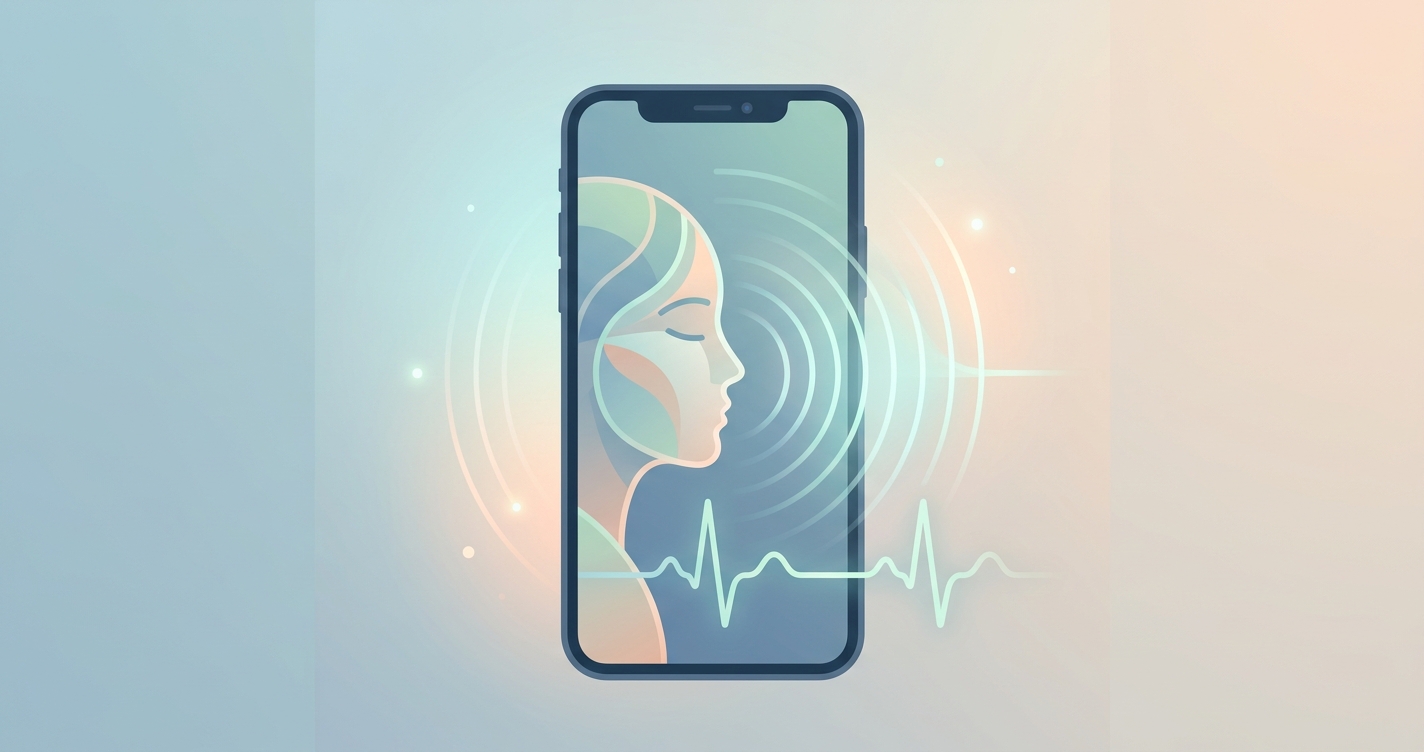
The question sounds like marketing hyperbole until you read the validation literature. A user opens an app, looks into the front camera for 30 to 60 seconds, and the software returns a pulse rate, a rhythm assessment, and in some research builds an estimate of blood pressure trend. No chest strap, no finger clip, no paired wearable. For engineering leaders evaluating whether a heart problem app with no device is a real product category or a demo trick, the honest answer is that the signal is real, the math is well documented, and the hard part is everything that happens between a raw camera frame and a number a clinician would trust. This article looks at what remote photoplethysmography (rPPG) can and cannot detect from skin alone, and what that means for teams deciding whether to integrate a contactless vitals API.
A 2025 systematic review and meta-analysis of smartphone photoplethysmography for atrial fibrillation detection, led by researchers at the University of Birmingham, reported pooled sensitivity of 0.96 and specificity of 0.97 across the studies reviewed.
How a heart problem app with no device reads the cardiovascular signal
The physics has been understood for over a decade. Every time the heart contracts, a pressure wave pushes blood through the arterioles just beneath the skin. That extra blood volume absorbs slightly more green light, so the skin darkens by an amount invisible to the human eye but measurable by an ordinary RGB camera. By tracking the average color of a face region across many frames, an rPPG pipeline reconstructs the blood volume pulse waveform. That waveform is the same physiological event a fingertip pulse oximeter captures, sampled optically from a distance instead of through transmitted light.
From that reconstructed waveform, a heart problem app with no device can derive several layers of information:
- Heart rate, measured as the dominant frequency of the pulse signal.
- Pulse rate variability (PRV), the beat-to-beat timing variation that approximates heart rate variability and reflects autonomic nervous system balance.
- Rhythm irregularity, where chaotic or absent regular intervals can flag arrhythmias such as atrial fibrillation.
- Morphological features of the pulse wave that correlate, imperfectly, with blood pressure trends.
The distinction that matters for product teams is between measurement and screening. Measuring heart rate from a clean facial video is close to a solved problem. Flagging that a heart "is struggling" is a screening claim, and screening means probabilities, sensitivities, and false positives that have to be communicated and governed carefully.
| Capability | What the camera signal supports | Maturity for production | Engineering consideration |
|---|---|---|---|
| Resting heart rate | Direct from pulse frequency | High | Robust to most lighting if face is stable |
| Pulse rate variability / stress proxy | Beat interval timing | Medium to high | Needs clean signal, longer capture window |
| Rhythm screening (e.g. AF indicator) | Irregularity in beat intervals | Medium, research-strong | Screening framing and clinical disclaimers required |
| Blood pressure trend | Pulse wave morphology | Early, research only | High error margins, not a diagnostic claim |
| Blood oxygen estimation | Multi-wavelength absorption | Limited on standard RGB | Often needs controlled conditions |
Industry applications for contactless cardiovascular screening
The appeal for health platforms is accessibility. A camera-based check removes the cost and supply chain of hardware, which is exactly what makes population-scale screening feasible. Several application patterns are now common among teams integrating a contactless vitals API.
Telehealth and virtual triage
During a video consultation, a clinician already has the patient's face on screen. Capturing a pulse and rhythm reading inside that same session adds objective data to an otherwise subjective encounter, with no shipping of devices to the patient.
Insurance and population health
Carriers and population health programs use brief face scans during onboarding or wellness check-ins. The reach is the point: a heart problem app with no device can be deployed to millions of policyholders through software alone, surfacing candidates for follow-up cardiac evaluation.
Pharmacy and retail health kiosks
Public-facing kiosks can offer a quick cardiovascular wellness reading. Because there is no contact sensor to clean or replace between users, the hygiene and maintenance profile is far simpler than contact-based stations.
Embedded wellness in non-medical apps
Fitness, meditation, and corporate wellness products fold a quick scan into existing flows. These are wellness framings rather than diagnostic ones, which keeps the regulatory surface area manageable while still delivering perceived value.
Current research and evidence
The evidence base has grown quickly. On rhythm detection, a 2024 real-time contact-free atrial fibrillation system built for mobile devices reported 94.39 percent accuracy, 91.57 percent sensitivity, and 95.44 percent specificity using facial rPPG alone. That sits below the contact-PPG meta-analysis numbers but is notable because it removes the finger entirely from the loop. The broader smartphone PPG literature, summarized in the University of Birmingham meta-analysis, shows pooled sensitivity and specificity in the high 0.90s for AF, though most of those studies still used contact PPG through the fingertip rather than the face.
On vital sign estimation from facial video, a 2024 multimodal study published in Sensors by a group reporting in MDPI combined rPPG with physical attributes such as age, height, weight, and BMI and improved noninvasive heart rate accuracy over video alone. For blood pressure, the picture is more cautious. A 2024 phase-shifted rPPG framework described on arXiv reported a mean absolute error around 1.78 BPM for heart rate but roughly 10.19 mmHg for systolic and 7.09 mmHg for diastolic blood pressure. Those blood pressure errors are large enough that no responsible team should present a camera-derived blood pressure as a clinical value today.
A 2024 review in Frontiers in Cardiovascular Medicine on deep learning and rPPG, and a camera-based blood pressure review in the journal Blood Pressure (OAE Publishing, 2023), both reach a similar conclusion: heart rate and rhythm screening are approaching practical reliability, while blood pressure and oxygen saturation remain research targets. Three recurring limitations appear across nearly every paper:
- Motion artifacts, since a moving face corrupts the color signal.
- Lighting variation, which changes the baseline the algorithm subtracts.
- Skin pigmentation bias, where lower signal contrast on darker skin tones can degrade accuracy if training data and processing do not account for it.
For an engineering team, those three constraints are not reasons to avoid the technology. They are the specification. A production-grade contactless vitals API succeeds or fails on how well it handles motion, light, and pigmentation, not on whether it can read a perfect pulse in a lab.
The future of contactless cardiovascular detection
The direction of travel is from single-point readings toward passive, repeated measurement. A camera that captures a pulse during a 30-second scan can, in principle, capture readings opportunistically whenever a user is already looking at their screen, building a trend line rather than a snapshot. Trend data is where rhythm and variability screening becomes genuinely useful, because a single irregular reading means little while a pattern of irregularity is actionable.
Three shifts will define the next few years. First, model efficiency: research groups are reducing parameters and FLOPs so rhythm detection runs on-device, which improves both latency and privacy. Second, multimodal fusion, combining camera signal with context the app already holds. Third, fairness validation across skin tones and conditions, which is moving from an afterthought to a procurement requirement. Teams that treat demographic robustness as a first-class metric will have a defensible product as scrutiny increases.
The realistic near-term claim is not that an app diagnoses heart disease without hardware. It is that a heart problem app with no device can reliably surface measurable indicators, heart rate, rhythm irregularity, and variability, that route a user toward appropriate care faster and at lower cost than any hardware-dependent path.
Frequently asked questions
Can a phone camera actually detect a heart problem without any wearable?
It can detect indicators, not diagnoses. Camera-based rPPG reliably estimates heart rate and can flag rhythm irregularities such as those associated with atrial fibrillation, with research systems reporting accuracy above 90 percent. These are screening signals that should prompt clinical follow-up, not standalone diagnoses.
Why is heart rate accurate from a camera but blood pressure is not?
Heart rate depends on detecting the timing of the pulse, which the camera captures well. Blood pressure depends on subtle pulse wave shape and individual physiology, and current models still show errors around 10 mmHg, too high for a clinical reading. That gap is a focus of active research.
What are the main technical risks when integrating contactless cardiovascular detection?
Motion, lighting, and skin pigmentation are the three dominant sources of error. A capture flow that guides the user to stay still in adequate light, plus signal processing validated across skin tones, addresses most real-world failure modes.
Does contactless screening replace ECG or a pulse oximeter?
No. It complements them by widening access. An ECG remains the reference standard for rhythm diagnosis. Camera-based screening identifies who should get that ECG, which is valuable precisely because it requires no extra hardware.
Circadify is building developer infrastructure for exactly this space, a drop-in rPPG SDK and contactless vitals API that let teams add camera-based heart rate and rhythm screening without standing up a computer vision pipeline from scratch. If you are evaluating how a heart problem app with no device fits your roadmap, explore the developer docs and request API keys at circadify.com/custom-builds.