Why don't more health apps use the camera for vital signs yet?
A deep dive into the technical, regulatory, and user experience challenges that explain why more health apps have not yet adopted camera-based vital signs monitoring.
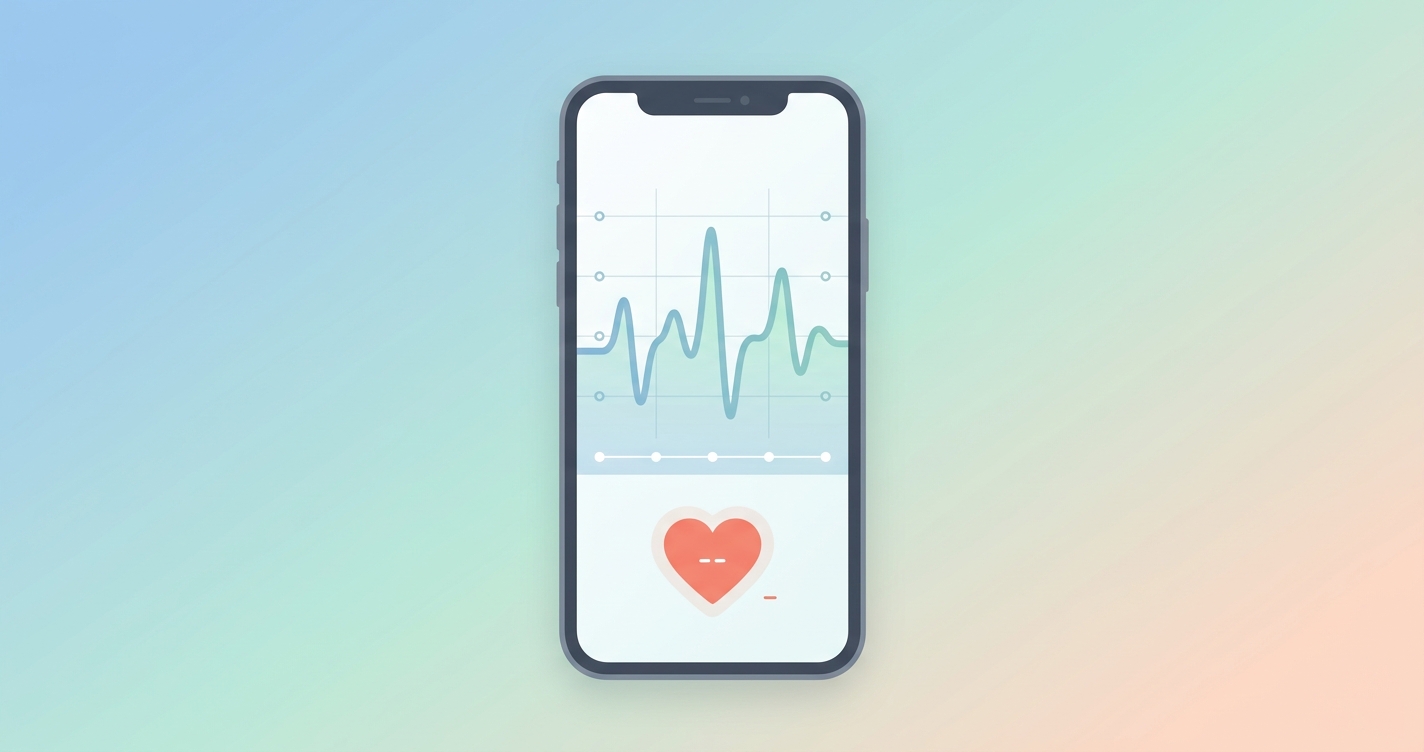
The smartphone camera is a marvel of miniaturization. It has democratized photography, put a video studio in every pocket, and unlocked augmented reality. It seems only logical that its next frontier would be health, offering a frictionless way to measure vital signs like heart rate, respiration, and even blood pressure. Yet, the vast majority of health and wellness apps on the App Store and Google Play have not implemented this feature. The question developers and product leaders are asking is: why don't more health apps use the camera for vital signs yet? The answer lies in a complex intersection of technical hurdles, regulatory scrutiny, and the high stakes of user trust.
"Many health apps lack transparent privacy policies, and current regulations may not fully protect user data from commercial exploitation. This creates a significant trust deficit that developers must overcome, especially when dealing with sensitive biometric data from a phone's camera." - American Heart Association (2022)
The core challenges of camera-based vitals
The primary reason more health apps using the camera for vital signs are not yet ubiquitous is the difficulty in achieving medical-grade accuracy and reliability outside of controlled lab conditions. The technology, known as remote photoplethysmography (rPPG), works by detecting minute changes in the light reflected from a person's skin, which correspond to the pulsing of blood through their vessels. While the principle is sound, the real-world application is fraught with challenges that fall into three main categories: technical, regulatory, and usability.
Technical and algorithmic complexity
Extracting a clean, reliable signal from a smartphone camera video feed is a significant engineering challenge. The signal-to-noise ratio is notoriously low, and algorithms must be robust enough to handle a wide array of confounding variables.
- Lighting Conditions: The intensity, color temperature, and angle of ambient light can drastically affect the quality of the reflected light signal. An algorithm that works perfectly in a well-lit office may fail completely in a dim room or under fluorescent lighting.
- Motion Artifacts: Even small movements by the user-a slight shift in posture, speaking, or an unsteady hand-can introduce noise that dwarfs the actual physiological signal. Advanced signal processing and motion cancellation techniques are required to mitigate this.
- Physiological Diversity: Skin tone, body mass index (BMI), and skin perfusion all impact how light is absorbed and reflected. A model trained primarily on one demographic may not be accurate for others, introducing a significant risk of algorithmic bias. Research published in medRxiv (2021) has highlighted the need for diverse datasets to ensure equity and accuracy.
- Hardware Variability: Unlike dedicated medical devices, smartphones have a wide range of camera sensors, lenses, and processing capabilities. An application must be able to calibrate its approach or confirm its performance across dozens of popular devices, a non-trivial quality assurance task.
The regulatory gauntlet
Perhaps the single greatest barrier is the regulatory landscape. When a health app makes claims about measuring, diagnosing, or managing a medical condition, it often crosses the line from a "wellness" app to a "Software as a Medical Device" (SaMD). In the United States, this brings it under the purview of the Food and Drug Administration (FDA).
- Classification: The intended use of the app determines its regulatory path. An app that simply provides a heart rate reading for "informational purposes" may have a lower regulatory burden than one intended to help a user manage atrial fibrillation.
- Validation Requirements: To gain clearance for a SaMD, developers must conduct extensive clinical testing to prove their device is both safe and effective. This involves comparing the app's measurements against a medical-grade gold standard across a statistically significant and diverse population. This process is expensive, time-consuming, and requires specialized expertise.
- Post-Market Surveillance: Regulatory approval is not a one-time event. Companies are typically required to monitor their app's performance in the real world and report any adverse events, a process known as post-market surveillance.
| Feature | Wearable Devices (e.g., Smartwatch) | Camera-Based Vitals (rPPG) in Apps |
|---|---|---|
| Hardware Dependency | Requires user to own/wear a specific device. | Utilizes the smartphone camera already present. |
| User Friction | High initial friction (purchase, setup, charging). | Low initial friction (part of an existing app). |
| Implementation | Integrate with hardware partner's SDK (e.g., HealthKit). | Requires a sophisticated rPPG SDK or in-house build. |
| Data Quality | Generally high due to direct skin contact (PPG). | Variable; highly dependent on algorithm and conditions. |
| Regulatory Path | Often cleared as a system (hardware + software). | App is regulated as SaMD based on its claims. |
| Development Cost | Primarily integration and UI/UX work. | High R&D, data science, and clinical validation costs. |
Industry applications and use cases
Despite the challenges, some forward-thinking companies are successfully navigating the complexities to implement camera-based vitals for specific applications where the technology provides a distinct advantage.
Telehealth and remote patient monitoring
For telehealth platforms, the ability to gather objective patient data during a virtual consultation is a game-changer. An rPPG scan can provide a baseline for heart rate and respiratory rate, giving clinicians more information to work with. It lowers the barrier to entry for remote monitoring programs, as it doesn't require shipping or managing dedicated hardware.
Wellness and behavioral health
In the wellness space, camera-based measurements can be a powerful tool for engagement. Apps focused on stress management, mindfulness, and fitness can use heart rate and heart rate variability (HRV) to show users the physiological effects of a meditation session or a breathing exercise, creating a powerful biofeedback loop.
Insurance and financial services
Insurtech and financial wellness platforms are exploring rPPG as a way to engage users and offer personalized insights. By providing a simple way to track general wellness indicators, these apps can encourage healthier habits and build a stronger, more data-informed relationship with their customers.
Current research and evidence
The scientific community is actively working to solve the core challenges of camera-based monitoring. A 2021 systematic review and meta-analysis published in a journal by the National Institutes of Health (NIH) found that while smartphone-based heart rate measurements can achieve high accuracy, more research is needed to validate other vital signs like blood pressure and blood oxygen saturation. Researchers like W. J. W. van der Wijngaard (2021) have focused on developing deep learning models that can better account for motion and lighting variations, improving signal extraction in real-world scenarios. The consensus in the research community is that while the technology is promising, robust validation remains a critical and ongoing area of focus.
The future of camera-based health monitoring
The future of health apps camera vital signs why not being a solved problem hinges on advancements in AI and a clearer regulatory framework. We are moving toward on-device processing, where neural engines on modern smartphones can run complex algorithms without needing to send sensitive video data to the cloud, enhancing privacy and reducing latency. As these models become more sophisticated and are trained on larger, more diverse datasets, their accuracy and reliability will continue to improve. Standardization of validation protocols will also be key, allowing developers to benchmark their solutions against established criteria.
Frequently asked questions
Q: Is an app using the camera for heart rate considered a medical device? A: It depends entirely on the app's intended use and marketing claims. If the app is marketed for medical purposes, such as diagnosing or treating a disease, it will likely be regulated as a medical device by authorities like the FDA. If it's positioned for general wellness or fitness tracking, the regulatory burden may be lower.
Q: What is the biggest technical challenge with camera-based vitals? A: Signal extraction and noise cancellation. The physiological signal (the change in reflected light due to blood flow) is incredibly subtle. Factors like user movement, changes in ambient lighting, low-quality cameras, and even a user's skin tone can introduce noise that is much stronger than the signal itself. Overcoming this requires sophisticated algorithms grounded in signal processing and machine learning.
Q: Why can't I just use an open-source library to add vitals to my app? A: While some open-source computer vision libraries exist, they typically do not provide the level of accuracy, robustness, or validation required for a commercial health application. Building a production-grade system involves extensive data collection, model training, and rigorous testing to handle the vast number of real-world variables, which is a multi-year R&D effort.
While the challenges of building, validating, and deploying camera-based vital signs are significant, they are not insurmountable. The path from a simple camera sensor to a reliable health monitoring tool is complex, but it represents a major opportunity for innovation. For engineering teams at health platforms who want to integrate this powerful technology without the multi-year R&D and regulatory process, Circadify provides a validated, drop-in SDK. To learn more about accelerating your product roadmap with a custom SDK build, visit our developer portal at circadify.com/custom-builds.