Should I build my own rPPG model or use an existing SDK?
A detailed analysis of the costs, timelines, and expertise required to build a custom rPPG model versus integrating a pre-built SDK for contactless vitals.
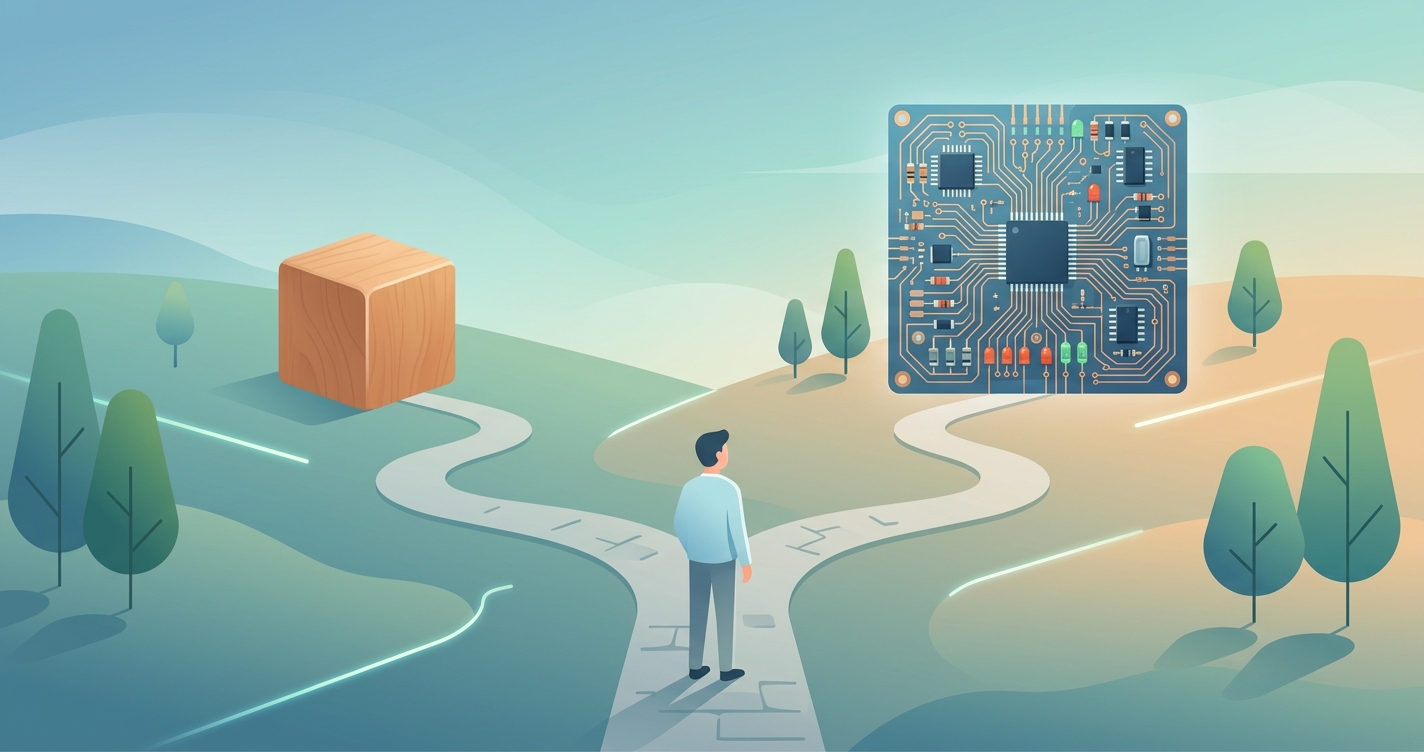
The integration of camera-based vital sign monitoring into applications presents a critical fork in the road for engineering leaders: should you build a proprietary remote photoplethysmography (rPPG) model or license a specialized SDK? This decision impacts not just the initial development timeline and budget, but also long-term maintenance, scalability, and the ability to focus on core product innovation. For technical teams and indie developers alike, understanding the trade-offs is the first step toward a successful implementation.
"Building a custom ML model can cost anywhere from $10,000 for simpler models to over $1,000,000 for complex enterprise solutions, with ongoing maintenance consuming 15-20% of the initial development budget annually."
The core decision: build rPPG model vs SDK
The choice between building an rPPG model vs using an SDK is a classic "build vs. buy" dilemma, amplified by the complexities of machine learning and signal processing. Building a model from the ground up offers maximum customization but demands deep, specialized expertise and significant resources. Licensing an SDK, on the other hand, provides a faster path to market by abstracting away the underlying scientific challenges, allowing development teams to focus on application-level features and user experience.
A ground-up approach involves several stages, each with its own costs and complexities. First is data acquisition and annotation, which requires collecting a large and diverse dataset of facial videos correlated with ground-truth vital sign measurements from medical-grade devices. The model must then be trained to handle a wide range of real-world variables, including motion artifacts, fluctuations in lighting, and variations in skin tone and physiology. Finally, the model must be optimized for deployment on target devices, which often have limited computational resources.
An SDK approach offloads this entire R&D process. A commercial SDK provides a pre-trained, optimized model and a stable API, allowing developers to integrate contactless vital sign measurement with just a few lines of code. This dramatically reduces development time and upfront investment. The trade-off is a degree of dependency on the SDK provider for updates, new features, and ongoing support.
| Feature | Build In-House rPPG Model | License rPPG SDK |
|---|---|---|
| Initial Cost | High ($100k - $1M+) | Low (Subscription or usage-based) |
| Time to Market | 12-24+ months | 1-4 weeks |
| Required Expertise | ML PhDs, Signal Processing, Optics | Mobile/Web Application Developers |
| Data Requirements | Massive, diverse, annotated datasets | None (handled by SDK provider) |
| Maintenance | Continuous model retraining, updates | Included in license fees |
| Scalability | Requires dedicated MLOps infrastructure | Managed by SDK provider |
| Risk | High (Technical, regulatory, market) | Low (Proven, documented solution) |
Key factors to consider
When evaluating the build rPPG model vs SDK options, engineering leaders should weigh the following factors:
- Core Competency: Is developing novel rPPG technology a core part of your business strategy, or is it a feature supporting a larger product? If it's the latter, an SDK is almost always more efficient.
- Team Expertise: Do you have, or can you afford to hire, a team with expertise in computer vision, signal processing, machine learning, and clinical validation? This talent is scarce and expensive.
- Time to Market: How critical is speed? Building a robust rPPG model is a multi-year endeavor. An SDK can get you a working prototype in days and a production-ready feature in weeks.
- Budget: In-house development requires a significant, long-term R&D budget covering salaries, data acquisition, and infrastructure. SDKs typically have predictable, operational costs.
- Risk Tolerance: An in-house model carries the risk of failure. The model may not achieve the required accuracy, or it may be too computationally expensive for target devices. SDKs are pre-validated solutions.
Industry Applications
For most companies, the goal is not to become an rPPG research lab but to use the technology to enhance their products.
- Telehealth Platforms: Need to quickly integrate reliable vitals measurement to improve virtual consultations. An SDK allows them to do this without diverting resources from their core platform.
- Wellness Apps: Want to add engaging health-tracking features. Speed and ease of integration are critical, making an SDK the logical choice.
- Insurtech: Are exploring ways to use vitals data for risk assessment. An SDK provides a standardized, scalable method for data collection.
- Enterprise Solutions: Large-scale deployments in corporate wellness or remote patient monitoring require a robust, supported, and scalable solution that an enterprise-grade SDK can provide.
Current research and evidence
The scientific foundation of rPPG is well-established, but perfecting it for real-world use is a significant challenge. Early foundational research, such as the 2008 paper "Remote plethysmographic imaging using ambient light" by Wim Verkruysse, L.O. Svaasand, and J.S. Nelson from the Beckman Laser Institute, demonstrated that the green light spectrum is most effective for detecting the blood volume pulse in facial skin due to the absorption characteristics of hemoglobin.
Building on this, modern research focuses on solving key implementation hurdles:
- Motion Artifacts: Subject movement is a primary source of signal noise. Advanced models use techniques like facial landmark tracking and adaptive filtering to isolate the cardiac signal, but this is a complex engineering problem. A 2023 study published in Frontiers in Bioengineering and Biotechnology highlighted the ongoing difficulty in mitigating motion artifacts in naturalistic settings.
- Illumination Variance: Changes in ambient lighting can drastically alter the signal-to-noise ratio. A robust model must be trained on data from a wide variety of lighting conditions or use sophisticated color-space transformation algorithms like CHROM to maintain accuracy.
- Skin Tone Diversity: The melanin content in the skin affects light absorption and reflection, posing a major challenge for equity and fairness. Building an inclusive model requires a dataset that is carefully balanced across all Fitzpatrick skin types, a process that is both time-consuming and expensive.
The future of rPPG development
The field is moving toward more sophisticated models that are processed on-device for privacy and low latency. The next generation of rPPG technology will likely involve multi-modal sensing, fusing camera data with other inputs for even greater accuracy. For a single development team, keeping pace with these advancements is a formidable task. SDK providers, by contrast, can amortize this research and development cost across their entire customer base, continuously delivering improvements through simple software updates.
Frequently asked questions
What is the main advantage of using an rPPG SDK? The primary advantage is speed. It allows you to integrate a complex, scientifically validated technology into your application in a matter of weeks instead of years, dramatically accelerating your time to market.
How long does it take to build a basic rPPG model from scratch? Building a proof-of-concept might take 6-9 months for a skilled team. However, developing a production-ready, robust, and accurate model that works across a wide range of devices, lighting conditions, and user demographics can easily take over two years.
Is it cheaper to build an rPPG model in-house? Almost never. While an SDK comes with licensing fees, the total cost of hiring a specialized team, acquiring a massive training dataset, and managing the required infrastructure for several years is orders of magnitude higher.
Can I customize a third-party rPPG SDK? It depends on the provider. While the core model is typically a black box, some SDKs offer extensive configuration options for the user interface, data processing, and on-device vs. cloud processing.
The decision to build rPPG model vs SDK ultimately comes down to a strategic assessment of your company's resources, priorities, and core mission. If your goal is to push the boundaries of rPPG science, building in-house may be the right path. However, for the vast majority of companies looking to add powerful health monitoring features to their applications, a specialized SDK is the more pragmatic, efficient, and cost-effective choice. Circadify is addressing this space with a developer-first rPPG SDK designed for rapid integration and scalability. To learn more about custom builds and start integrating, visit our developer portal at circadify.com/custom-builds.